F1Weekly Podcast # 1131
A NUMBER OF TEAMS NOT SHOWING UP FOR DAY ONE OF TESTING! WILLIAMS TO MISS THE FIRST TEST ENTIRELY!
MCLAREN WIN A $12 MILLION DOLLAR JUDGEMENT AGAINST ALEX PALOU FOR BREACH OF CONTRACT.
SOME TEAMS STILL NOT HAPPY WITH ENGINE LOOP HOLE AND THE FIA’S ANSWER TO THE PROBLEM!
DIFFUSER ARE BACK IN THE LIME LIGHT…
AND…FERNANDO SEEN GIGGLING AND ANXIOUS TO GET HIS HANDS ON THE ASTON MARTIN!
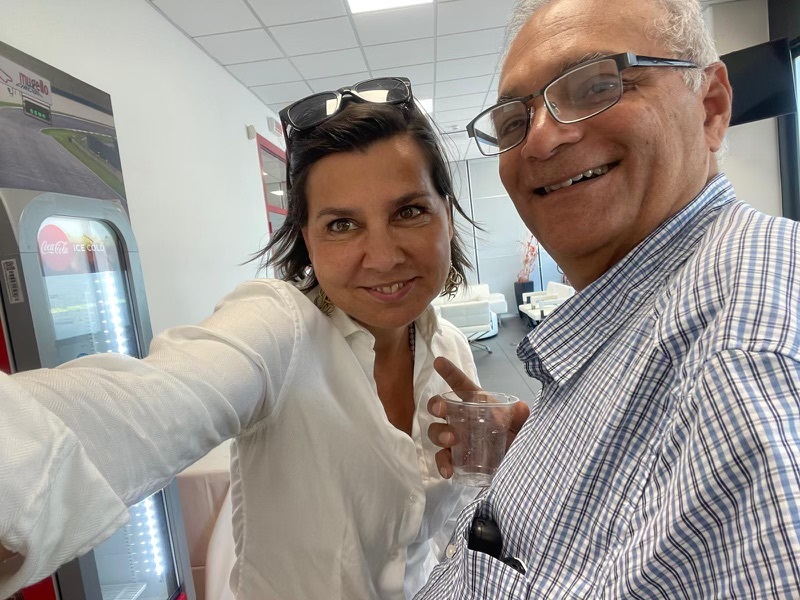
THIS WEEK’S NASIR HAMEED CORNER…MORE VINTAGE BANTER BETWEEN THE HOST AND NASIR…PERFECT FOR MEDITATION WE HAVE EDDIE CHEEVER!!

Eddie Cheever Jr. carved out a unique place in Formula 1 history as one of the most tenacious American drivers to compete at motorsport’s highest level. Born in Phoenix, Arizona, in 1958, Cheever spent nine seasons racing in Formula 1 between 1978 and 1989, becoming a familiar face on circuits from Monaco to Silverstone.
His career spanned multiple decades and continents, transitioning from European Formula 1 circuits to American IndyCar ovals with remarkable adaptability. Cheever’s journey represents the classic American racing dream made reality through determination, skill, and an unwavering commitment to speed.
This comprehensive examination explores Cheever’s complete racing story, from his early Formula 1 breakthrough to his IndyCar triumph at the Indianapolis 500, revealing how one driver successfully navigated two distinctly different racing cultures.

Early Life and Racing Genesis
Edward McKay Cheever Jr. was born on 10 January 1958 in Phoenix, Arizona, into a family that understood the value of pursuing ambitious goals. His father, Eddie Cheever Sr., recognised his son’s potential early and made the crucial decision to relocate the family to Europe when Eddie was just a teenager. This move proved instrumental in shaping Cheever’s racing destiny.
The Cheever family settled in Rome, Italy, where Eddie began his formal motorsport education. This European base provided access to the junior formula series that served as a stepping stone to Formula 1. Unlike many American drivers who remained focused on domestic racing series, Cheever immersed himself completely in European racing culture from the beginning.
His early racing experiences in Italy taught him the fundamental skills required for road course racing. The technical precision demanded by European circuits contrasted sharply with the oval racing that dominated American motorsport. Cheever adapted quickly to this environment, developing the car control and racecraft that would serve him throughout his career.
Professional Development and Character
Cheever’s personality combined American determination with European sophistication. Colleagues remember him as intensely focused yet approachable, possessing the communication skills necessary to work effectively with international teams. His bilingual abilities proved advantageous when working with Italian and French teams later in his Formula 1 career.
His physical conditioning reflected the professional standards expected in Formula 1. Standing at medium height with a lean build, Cheever maintained the fitness levels required for the physical demands of racing at circuits like Monaco and Spa-Francorchamps. His consistency in qualifying and race performances demonstrated the mental toughness developed through years of European competition.
Theodor Racing and Formula 1 Debut
Cheever’s Formula 1 journey began with Theodor Racing in 1978, a Swiss team that provided opportunities for emerging drivers. The team operated with modest resources but maintained professional standards that prepared Cheever for the demands of Grand Prix racing. His debut came at a time when Formula 1 was becoming increasingly competitive and technologically sophisticated.
Working with Theodor Racing taught Cheever essential lessons about Formula 1 operations. The team’s limited budget meant every component had to be used efficiently, and drivers were expected to provide detailed technical feedback to help optimise performance. These early experiences developed his engineering communication skills, which have proved valuable throughout his career.
The Swiss team environment exposed Cheever to the international nature of Formula 1. Team members came from various European countries, requiring him to navigate different working styles and cultural approaches to racing. This multicultural exposure prepared him for future partnerships with larger, more diverse teams.
Osella Partnership and Italian Racing Culture
Cheever’s move to Osella in 1979 marked his introduction to Italian racing passion and technical innovation. The Italian team, based in Volpiano near Turin, represented the traditional approach to motorsport that characterised many European constructors. Working with Osella provided insights into Italian engineering philosophy and racing culture.
The partnership with Osella lasted multiple seasons, allowing Cheever to develop long-term relationships with team personnel. Italian teams traditionally emphasised driver input in car development, and Cheever’s technical feedback became increasingly valuable as he gained experience with different circuits and racing conditions.
Osella’s financial limitations meant Cheever often competed with older chassis and engines, requiring him to maximise performance through driving skill rather than technological advantages. These challenging circumstances developed his ability to extract speed from any available equipment, a skill that served him well throughout his career.
Tyrrell Racing and Professional Growth
The transition to Tyrrell Racing represented a significant step forward in Cheever’s Formula 1 career. Ken Tyrrell’s team maintained higher professional standards and provided access to more competitive machinery. The partnership offered opportunities to compete regularly for points and occasional podium positions.
Tyrrell’s organisation reflected traditional British racing values, emphasising technical excellence and professional conduct. Working with experienced team members taught Cheever advanced car setup techniques and race strategy development. The team’s systematic approach to Grand Prix weekends provided a template for professional racing operations.
The British team environment required Cheever to adapt to different communication styles and working methods. Tyrrell’s emphasis on driver development aligned well with Cheever’s commitment to continuous improvement, creating a productive partnership that advanced his Formula 1 career significantly.
Renault Factory Team Experience
Joining Renault marked the pinnacle of Cheever’s Formula 1 team affiliations. The French manufacturer’s factory team provided access to cutting-edge technology and unlimited resources, representing a dramatic change from his previous partnerships. Renault’s turbo engines offered competitive power levels that enabled regular points scoring and podium contention.
The factory team environment exposed Cheever to advanced engineering methods and sophisticated data analysis techniques. Renault’s technical departments employed hundreds of specialists working on aerodynamics, engine development, and electronics systems. This exposure to high-level motorsport technology broadened his understanding of Formula 1’s technical complexity.
Working alongside experienced teammates provided valuable learning opportunities. The collaborative environment at Renault encouraged information sharing between drivers, helping Cheever refine his car setup techniques and race strategy approaches. These partnerships demonstrated the importance of teamwork in achieving consistent Formula 1 success.

Nasr, Porsche Penske Motorsport Clinch Rolex 24 Three-Peat
No. 7 Porsche 963 Repels Late Charge from No. 31 Whelen Cadillac to Win in Front of Record-Setting Crowd at Daytona International Speedway.
DAYTONA BEACH, Fla. – Felipe Nasr capped a record-setting day at Daytona International Speedway by driving to a record-tying third consecutive Rolex 24 At Daytona overall win, leading Porsche Penske Motorsport to its third straight victory in the internationally renowned endurance sports car race.
Piloting the No. 7 Porsche Penske Motorsport Porsche 963 he shared with co-drivers Julien Andlauer and Laurin Heinrich in the Grand Touring Prototype (GTP) class, Nasr crossed the finish line 1.569 seconds ahead of Jack Aitken in the No. 31 Cadillac Whelen Cadillac V-Series.R. Nasr held off multiple charges from Aitken over a breathtaking final 20 minutes of the twice-around-the-clock classic that serves as the opener for the 2026 IMSA WeatherTech SportsCar Championship season.
Porsche won on a banner day for Daytona International Speedway, which announced and confirmed an all-time record attendance for the 64th Rolex 24 At Daytona event. Both Daytona and IMSA anticipated a strong crowd presence going into the weekend and advised fans to get to the facility early. The fans delivered in throngs on Saturday once the race started and again on Sunday when the race finished.
“This year’s 64th running of the Rolex 24 is indeed the highest attended Rolex 24 in the history of the event,” said Frank Kelleher, Daytona International Speedway President. “And all of you play a big part in that, telling the story and celebrating it. So our heartfelt thank you. Thank you everyone.”

With the win, Nasr joined Helio Castroneves (2021-23) and Peter Gregg (1973, 1975-76) as the only drivers to collect three Rolex 24 overall triumphs in a row. Porsche Penske Motorsport also tied for the most consecutive team victories, joining Chip Ganassi Racing (2006-08) and Wayne Taylor Racing (2019-21).
“Winning the 24 Hours of Daytona three consecutive times with this Porsche Penske Motorsport team is an incredible accomplishment,” said Roger Penske. “That sustained success is only achieved with great team work, focused and determined drivers, a resilient crew and a commitment to winning. Our success at this event helped put our team on the map over six decades ago and winning here in Daytona is a perfect way to celebrate the start of Team Penske’s 60th anniversary season. I also want to congratulate Porsche Motorsport on a great beginning to their 75th anniversary in 2026, as we continue to build on our winning legacy together. Today’s victory reflects the efforts and dedication of all those committed men and women working on the Porsche Penske Motorsport program, from Mooresville to Germany.”
Porsche’s No. 7 didn’t only win the race; it also won two races inside the race itself. The No. 7 car won the inaugural running of the IMSA Michelin Sustainability in Racing Award, which measures tire use, energy use and finish position to gauge the highest sustainability score in the GTP class. It was also the top scoring GTP finisher in the Michelin Endurance Cup, which awards points at the six-, 12-, 18- and 24-hour marks. The No. 7 car finished first at all four points-scoring moments.
The Nasr-Aitken battle wasn’t the only nail-biter as the clock wound down. In the Grand Touring Daytona (GTD) class, Philip Ellis in the No. 57 Winward Racing Mercedes-AMG GT3 and Nicki Thiim in the No. 44 Magnus Racing Aston Martin Vantage GT3 Evo pounded on each other throughout the closing laps – including a heart-stopping side-by-side contact as they raced past the start-finish line on the Daytona oval with 10 minutes to go – before Ellis emerged victorious by just 1.367 seconds. Winward earned its third Rolex 24 GTD win since 2021. Ellis and co-drivers Russell Ward and Indy Dontje have been part of each of those wins, with fourth driver Lucas Auer getting his first Rolex 24 victory.
Other class winners in the 64th running of the Rolex 24 were the No. 04 CrowdStrike Racing by APR ORECA LMP2 07 in Le Mans Prototype 2 (LMP2), with co-drivers George Kurtz, Alex Quinn, Toby Sowery and Malthe Jakobsen; and the No. 1 Paul Miller Racing BMW M4 GT3 EVO in Grand Touring Daytona Pro (GTD PRO), driven by Neil Verhagen, Connor De Phillippi, Max Hesse and Dan Harper.
The No. 1 Paul Miller BMW and No. 57 Winward Mercedes-AMG also won the GTD PRO and GTD classes of the Michelin Endurance Cup. AO Racing’s No. 99 “Spike,” the LMP2 Dragon now adorned in a gold livery for the Rolex 24, was the top-scoring LMP2 entry for the Michelin Endurance Cup.
The winning No. 7 Porsche led 375 of the 705 laps completed on the 3.56-mile road course that includes most of the 2.5 oval track. There were nine full-course cautions, including one for a race-record six hours, 33 minutes overnight due to dense fog that severely limited visibility for drivers, spotters and race officials.
Phoenix Open Test To Salute Unser Family
INDIANAPOLIS (Thursday, Jan. 22, 2026) – The incredible legacy of the Unser family at Phoenix Raceway will be honored when the NTT INDYCAR SERIES conducts an Open Test on Feb. 17-18 at the desert oval in advance of the series’ highly anticipated return to the track.
The Unser INDYCAR Open Test at Phoenix Raceway is open to all teams as they prepare for the Good Ranchers 250 on Saturday, March 7 as part of a buzzworthy weekend alongside NASCAR, providing a joint showcase of North American racing in partnership with FOX Sports. It’s the first INDYCAR SERIES race at the historic, 1.022-mile Phoenix oval since 2018.
Cars will be on track from 2-6 p.m. ET (noon-4 p.m. MT) on Tuesday, Feb. 17, with testing scheduled for 11 a.m.-2 p.m. ET (9 a.m.-noon MT) and 3:30-6:30 p.m. ET (1:30-4:30 p.m. MT) Wednesday, Feb. 18. The Wednesday sessions will be open and free to the public, with an autograph session at 2:45 p.m. ET (12:45 p.m. MT).
“The name Unser is synonymous with Phoenix Raceway,” INDYCAR President J. Douglas Boles said. “We’re honored to salute this family’s incredible accomplishments at their home track for this important Open Test, which sets the stage for INDYCAR’s return to Phoenix in March. As a longtime fan of the sport, I also really appreciate that the logo for this special test features some familiar colors from cars driven by Al and Bobby, which I’m sure will bring back many great memories for our loyal fans.”
Phoenix was the home INDYCAR SERIES track for the Unser family, which lived in and proudly represented Albuquerque, New Mexico. And no name is more linked with success at the desert oval.
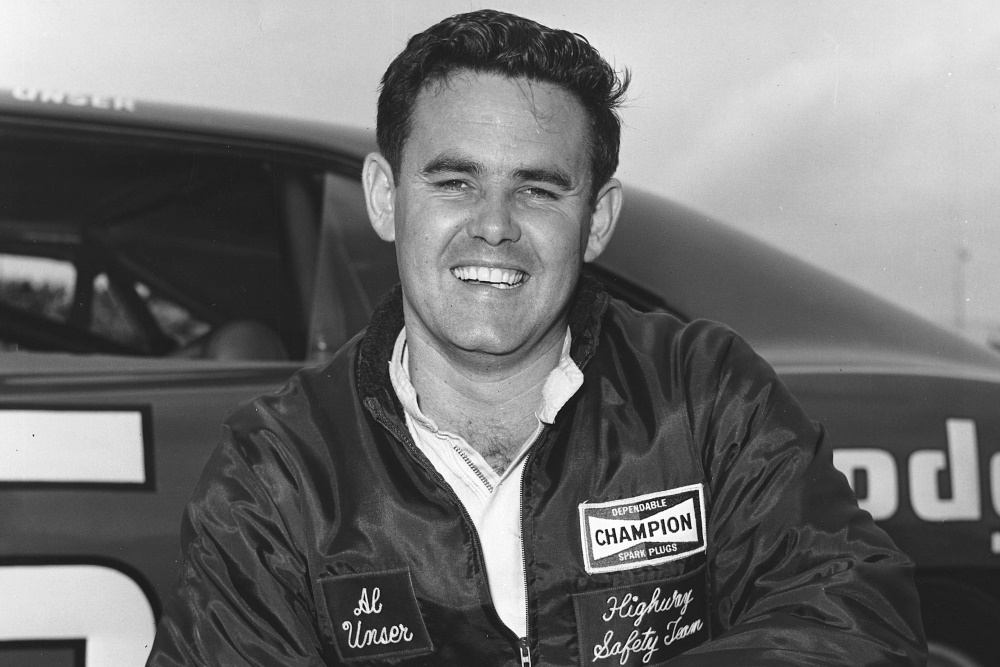
Al Unser won a track-record six INDYCAR SERIES races at Phoenix since the track first started hosting series events in 1964. He also won six poles at the track as part of an illustrious career that included three series championships and a record-tying four victories in the Indianapolis 500.
Bobby Unser took the checkered flag four times at Phoenix but powered to a track-record 11 poles at the tricky desert oval. He also won two series titles and three Indianapolis 500s.
Two-time series champion and two-time Indy 500 winner Al Unser Jr. finished runner-up at Phoenix four times.
“I’ll speak for our family and say how pleased we are to be honored in this way by INDYCAR,” Al Unser Jr. said. “Dad simply loved racing at Phoenix, and no one took it to the edge in qualifying there quite like Uncle Bobby. It was exciting to see the track added to the schedule this year, and the Open Test will be crucial for drivers and teams as they get ready for the race in March. I can’t wait to see the NTT INDYCAR SERIES back at Phoenix.””