F1Weekly Podcast # 1153
ON TODAYS PROGRAM…
LE CLERC MUST DO SOMETHING IN AUSTRIA OR HE WILL BE NUMBER TWO!!
MCLAREN SAYS BEING A MERCEDES CUSTOMER TEAM IS A DISADVANTAGE!
FORMULA ONE RULES KEEP ON EVOLVING!
GASLY’S MONACO PODIUM REINSTATEMENT WAS THE RIGHT THING TO DO AND…
FERNANDO LOOKING FORWARD TO THE DAKAR RALLY AND RACING AT LE MANS WITH MAX VERSTAPPEN!!!…
THIS WEEK’S NASIR HAMEED CORNER WE HAVE: A MOMENT IN MOTORSPORTS HISTORY…AN INTERVIEW WITH F1 PHOTOGRAPHER PETER NYGARD AND MORE TRIVIA!!!
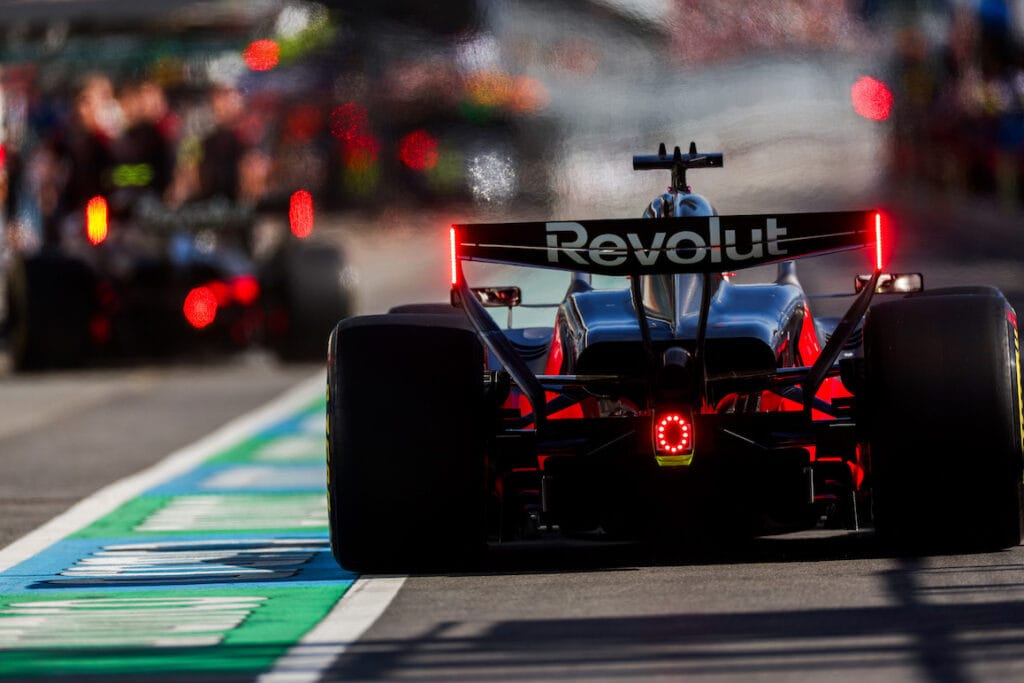
When the rear wing has to go in your carry-on – a look into the different worlds of logistics at Audi.
- How the logistics division of AUDI AG and the Formula 1 project benefit from each other
- Dieter Braun, Head of Audi Supply Chain, in discussion with his F1 colleagues Björn Brickwedde and Lars Rolack
- Logistics as a performance factor in motorsport and a driving force in road car production
More than 20 race weekends, global supply chains, tight time windows, geopolitical tensions, and the constant pressure to get every part to the right place on time: Formula 1 is not only a high-performance technological laboratory but also an extreme test for logistics. Many of the challenges faced by Audi Revolut F1 Team on the racetrack are also familiar to Audi Supply Chain – just on a different scale. A discussion between the logistics experts reveals what both worlds can learn from each other.
Dieter Braun, Head of Audi Supply Chain, sums it up: “If there’s one thing we need in the company, it’s speed. Not just on the racetrack, but when making decisions.” This is exactly where the key leverage lies: Formula 1 demonstrates what quick decisions, clear responsibilities, and precise preparation can achieve.
Logistics as a performance factor
In Formula 1, logistics directly determines on-track performance. Anything that isn’t at the track on time can’t be used. If transportation costs are too high, there’s less left in the budget for other areas. Björn Brickwedde, Head of Logistics at Audi Revolut F1 Team in Hinwil, Switzerland, explains: “Any savings we make in logistics can be invested in development and parts.”
This is especially true under Formula 1’s cost cap. Efficient logistics thus becomes a performance factor. Brickwedde cites specific examples: intelligent strategies for return shipments, minimal spare parts inventory, smart route planning, and determining the most cost-effective location from which to ship update parts or components. “Every expense saved can flow into development – and then into lap times.”
Audi Supply Chain, in turn, designs and manages the entire customer order process – from ordering an Audi to delivery to the customer. This complex system involves several thousand suppliers in nearly 60 countries to manage the flow of goods comprising around one million parts per day. Every optimization in this cross-divisional core process creates leeway – whether in terms of costs, capital tied up, or the CO2 footprint. “In our role as conductors, we can contribute hundreds of millions in earnings for the company,” says Braun.
One example illustrates the scope: Audi Supply Chain doesn’t just orchestrate – it also manages crises and, with experienced employees working as a team, overcomes short-term challenges. Braun describes a situation involving the production of the last Audi Q2 cars. A container with displays that could not be reproduced was on its way from China via Dubai to Germany when war broke out in the Middle East. “The shipping company spontaneously decided to call at a port in India and unload all the containers without consulting us,” says Braun. The goods couldn’t be obtained in time via India, so Audi organized a detour via Sri Lanka and Turkey. “The parts arrived half a day before they were needed,” says Braun, “otherwise we wouldn’t have been able to finish and deliver 2,000 Q2 cars.”
Brickwedde’s account of the Formula 1 season opener in Melbourne sounds very similar. “A supplementary shipment for the first race was supposed to fly from Zurich to Dubai – that’s exactly when restrictions on global air traffic took effect,” he says, referring to canceled transport routes. Important update parts were held up, just like the freight from other teams. “We organized an alternative route with F1 Cargo and DHL and prepared new customs documents. It was a nerve-wracking ordeal for everyone involved – but the parts arrived in Melbourne on Wednesday evening, and thanks to the great teamwork on site, both cars were fully assembled in time for the first session.” In doing so, the logistics team laid the groundwork for Audi Revolut F1 Team to score its first points right off the bat in its debut in the premier class of motorsport.
Speed is also a key factor in the Audi Supply Chain
The racing series brings into sharp focus what often remains abstract in mass production: the impact of quick decisions. “In a race, you immediately realize when you’ve made a wrong strategic decision – for example, when you leave the pit lane too late,” says Braun. “From a business perspective at Audi, the impact of a decision often only becomes apparent later, but it can be just as serious. Deciding too late during a crisis is problematic – but so is doing so during planning, for example with long-term investments, which makes it particularly challenging for my team and the relevant departments.”
The Formula 1 involvement provides a tangible narrative for this. Braun uses the Audi R26 as a permanent background image for his meetings – not just out of enthusiasm for motorsport, but as a signal to the organization: speed matters in the supply chain, too. Formula 1 shows that a good solution at the right time is more valuable than a perfect solution that comes too late.
When the rear wing has to go in your carry-on
The most exciting examples emerge where planning and improvisation meet. Brickwedde talks about the limited availability of parts during race operations: “We manage the production of parts very efficiently. This is partly because of the cost cap, but also because we only take to the racetrack what we genuinely believe we’ll need. If something unexpected happens, you’ve got to think on your feet. This means that a team member might have to carry the necessary components in their luggage so that they’re available at the track as quickly as possible. In a pinch, these could even be parts of a rear wing.”
Time windows are tight on the power unit side as well. Lars Rolack, Head of Logistics at Audi Formula Racing in Neuburg an der Donau, describes the unscheduled return shipment of a high-voltage battery during the race weekend in Miami: hazardous materials, special customs and transport regulations, a short analysis window in Neuburg – and shipment back out to the next race just a few days later. “The battery arrived at our facility in Neuburg on Monday morning and was shipped out again on Wednesday evening, heading for Montreal.”
Even though the processes at Audi Supply Chain are generally more predictable, the combination of foresight and flexibility remains a crucial success factor – for instance, in the face of supply bottlenecks, natural disasters, or geopolitical disruptions, which have almost become the new normal these days. Rolack used to work in the logistics division at AUDI AG himself before moving to the Formula 1 project. “My background in planning and my experience helped me, but race logistics is a very ad-hoc business – we all had to adapt our mindset extremely quickly to the pace.” While Audi’s supply chain division manages several thousand different suppliers across the globe using a multitude of processes – now also with the help of complex mathematical algorithms – organizational skills and personal networks are what count in the F1 project. “If something gets stuck here, my first instinct is to pick up the phone. Thanks to lean processes and short lines of communication within the team, problems can be solved very quickly,” says Rolack
Lundgaard Charges From Last to First
To Win at Road America
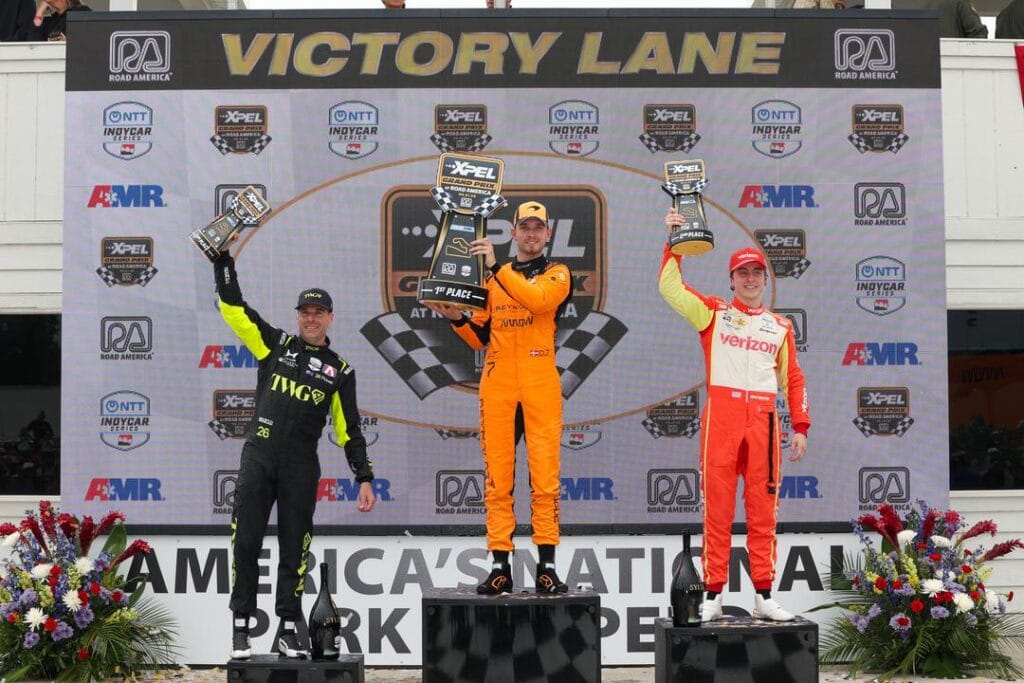
ELKHART LAKE, Wis. (Sunday, June 21, 2026) – Christian Lundgaard asked his Arrow McLaren team over the radio what everyone else also wondered after the Dane took the checkered flag Sunday for the XPEL Grand Prix at Road America Presented by AMR.
“How did we do that?” Lundgaard asked incredulously to his pit box.
SEE: Race Results
Lundgaard used strategy, speed and a bit of good fortune to climb from last in the 25-car field after contact on Lap 1 to earn his second victory of the season in the No. 7 Arrow McLaren Chevrolet. The race ended under caution when Graham Rahal spun into the gravel trap outside Canada Corner after contact with Will Power while dueling for third place on a one-lap restart to the checkered flag.
The victory was the third of Lundgaard’s NTT INDYCAR SERIES career, joining his win in May on the Indianapolis Motor Speedway road course with Arrow McLaren and in 2023 on the streets of Toronto with Rahal Letterman Lanigan Racing.
“I knew we had a chance,” Lundgaard said of the probability of winning after the early contact. “I knew how this race panned out last year, and I knew it was all about just sticking in the race. I did that last year. I made a bunch of mistakes last year that spun ourselves around last year, and I just wanted to make up for that.
“We’ve been on the struggle bus all weekend, so to turn this around, I have to thank the team for that.”
David Malukas finished second in the No. 12 Verizon Team Penske Chevrolet, his third runner-up finish of the season as he seeks his first career victory. Power held on to finish third in the No. 26 TWG AI Honda, matching his best finish of his first season with Andretti Global.
Kyffin Simpson finished a season-best fourth in the No. 8 Sunoco Chip Ganassi Racing Honda, with points leader and four-time series champion Alex Palou rounding out the top five in the No. 10 DHL Chip Ganassi Racing Honda.
Lundgaard, who started 12th, took the lead for the second and final time on Lap 52 of the 55-lap race when the No. 66 Meyer Shank Racing w/Curb Agajanian Honda of leader Marcus Armstrong slowed with a mechanical problem. Armstrong led by 2.787 seconds with five laps to go before mechanical fate cruelly robbed him of what may have been his first career victory.
Armstrong’s stricken machine finally lost power in Turn 5 on Lap 53, triggering a caution period and a one-lap race to the checkered flag.
(Photo by Travis Hinkle | IMS Photo)
Lundgaard never was challenged by Malukas on the final one-lap trip around the 14-turn, 4.014-mile road course, with most of the attention focused on the fierce duel for third between series veterans Power and Rahal. Power, holding a straight-line speed advantage, attempted to move to the outside of Rahal at the end of the back straightaway, with both cars making contact and Rahal’s No. 15 MSC Industrial Supply Honda spinning into the gravel, ending the race.
That was the climax to a thrilling race filled with varying tire strategies and fierce competition for nearly every position. But nothing was more exciting or improbable than Lundgaard’s charge to the front.
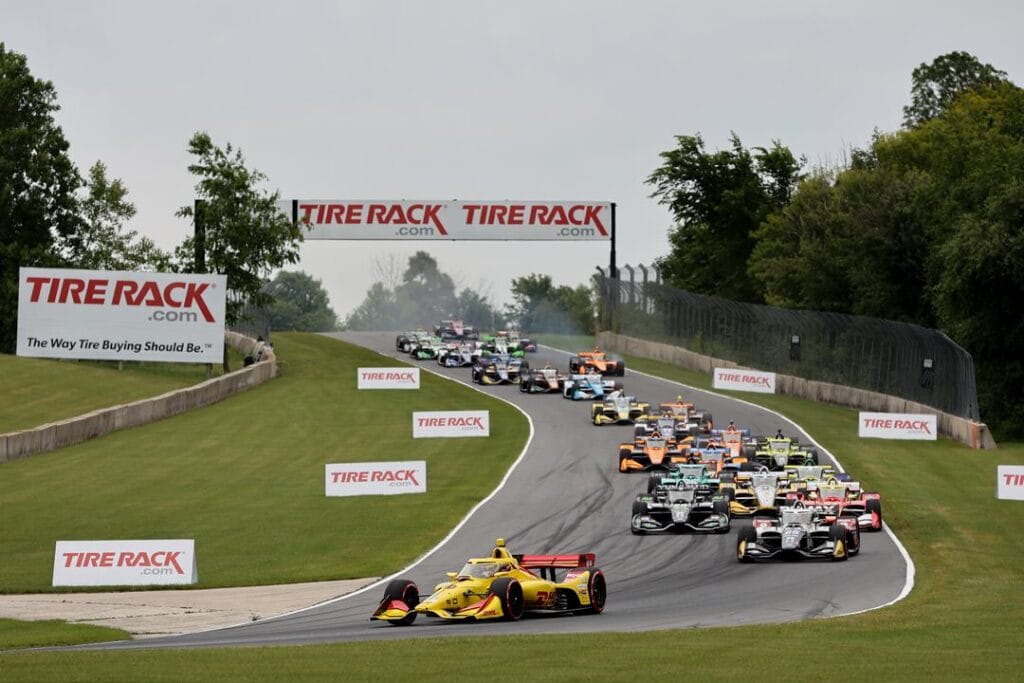
On the opening lap, Lundgaard made contact with Scott Dixon in Turn 1, damaging the left front wing on Lundgaard’s car and deflating one of his Firestone Firehawk tires. He pulled into the pits on Lap 2 for tires, fuel and a new front wing, with Arrow McLaren strategists devising new tactics on the fly.
Lundgaard cycled to the lead for the first time on Lap 43 when Armstrong, Malukas and Rahal made their final pit stops from the top three positions.
Danish driver Lundgaard led Rosenqvist by 11.720 seconds on Lap 45 when he made his final pit stop, with the Arrow McLaren team refilling his fuel and fastening four Firestone Firehawk alternate tires in a speedy 7.1 seconds.
The big cushion before the stop allowed Lundgaard to exit his final stop second behind Armstrong and just ahead of Malukas, who had hotter, stickier rubber on his wheels and passed Lundgaard for second on Lap 46.
Josef Newgarden made his final stop from the lead on Lap 49 in the No. 2 PPG Team Penske Chevrolet, handing the lead back to Armstrong, who was 3.671 seconds ahead of Malukas.
Meanwhile, Lundgaard passed Malukas for second on Lap 49, with Armstrong nearly three seconds up the road. Then Armstrong’s bid for his first win evaporated as his power dwindled, letting Lundgaard pass for the lead on Lap 52.
“It was all smooth sailing,” a deflated Armstrong said. “I came out of Turn 6, and the engine just started sputtering like it was out of fuel. But clearly it wasn’t. And then it just completely died. There was no indication there was nothing wrong.”
Pole sitter Palou led 13 laps, but his chances for a fourth career Road America victory vanished when he was penalized for speeding in the pits on Lap 29. Palou fell to 22nd after his drive-through penalty on one of the longest pit roads in the series, but he was appointment viewing in his charge toward the front over the closing 25 laps.
Palou leads second-place Malukas by 60 points and third-place Kyle Kirkwood, who finished 10th, by 61 points in the standings. Lundgaard is fourth, 77 points behind Palou.
The next NTT INDYCAR SERIES event is The Honda Indy 200 at Mid-Ohio Presented by the 2027 CR-V Hybrid on Sunday, July 5 at Mid-Ohio Sports Car Course near Columbus, Ohio.
— with Nasir Hameed and Toby Dawes.
Hughes Back in Tight Title Fight
With Road America Victory
ELKHART LAKE, Wis. (Saturday, June 20, 2026) – This was more than just a victory for Lochie Hughes. It may have saved his season.
Hughes earned his first INDY NXT by Firestone victory of 2026 and reinserted himself into the championship hunt by winning the first race of the Grand Prix at Road America doubleheader Saturday on the 14-turn, 4.014-mile road course.
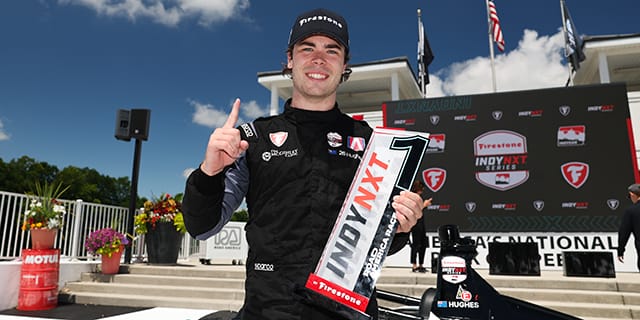
(Photo by Travis Hinkle | IMS Photo)
Australian Hughes, driving the No. 26 Andretti Global entry, crossed the finish line .7827 of a second ahead of teammate Josh Pierson in the No. 29 Starchive Andretti car. It was the 100th victory for Andretti Global in INDY NXT competition. Pole sitter Alessandro de Tullio finished third in the No. 14 AJ Foyt Racing machine.
“Just so happy right now,” Hughes said. “It’s possibly been the worst season of my life so far. That was great. I know my name is Lochie, but I feel a bit more like Rocky right now because I’ve been taking some punches this year.”
Hughes was the top returning driver to the INDYCAR development series this season after finishing third as a rookie with Andretti Global, with two victories. He has struggled in 2026, entering this event seventh in the standings with a best result of second in the opening race of the Indianapolis road course doubleheader in May.
“So, yeah, relieved,” Hughes said. “We’ve been trying all year, but I guess losers try their best, and winners go home with the prom queen. We got the prom queen.”
Rookie Jack Beeton produced a career-best finish of fourth in the No. 45 HMD Motorsports car, with Matteo Nannini putting two Cape Motorsports Powered by ECR entries in the top five in the team’s No. 20 car.
Hughes climbed to fifth in the standings with his third career victory, 55 points behind leader Nikita Johnson, who finished sixth in the No. 21 Cape Motorsports Powered by ECR entry.
The start of the 20-lap race was choppy, with eight of the first 10 laps run under caution due to three separate incidents.
Hughes was running second behind de Tullio on a restart at the end of Lap 8 when he swung to the outside in Turn 1 on Lap 9 and powered to a lead he would not surrender. Hughes got a big jump on the last of four restarts on Lap 11 and never was threatened, maintaining a gap between seven- and nine-tenths of a second until the checkered flag.
Pierson drove around the outside of de Tullio in Canada Corner on the final lap to claim second. That tied his best career finish and continued the upswing that started with his third-place finish June 7 on the World Wide Technology Raceway oval.
Race 2, an 18-lap event, is set for noon ET Sunday (FS1, FOX One, INDYCAR Radio powered by OnlyBulls). De Tullio again will start from pole with just 55 points separating the top five drivers.
Johnson leads second-place Tymek Kucharczyk – who salvaged an eighth-place finish after starting 14th in the No. 71 HMD Motorsports car – by 10 points. Enzo Fittipaldi is third, 23 points behind Johnson after a season-low finish of 22nd in the No. 67 HMD Motorsports machine due to damage from contact on the first lap.
Andretti Global’s Max Taylor, who finished 12th in the No. 28 Susan G. Komen car, is fourth, 38 points behind Johnson.
A breath of fresh air in the Vosges
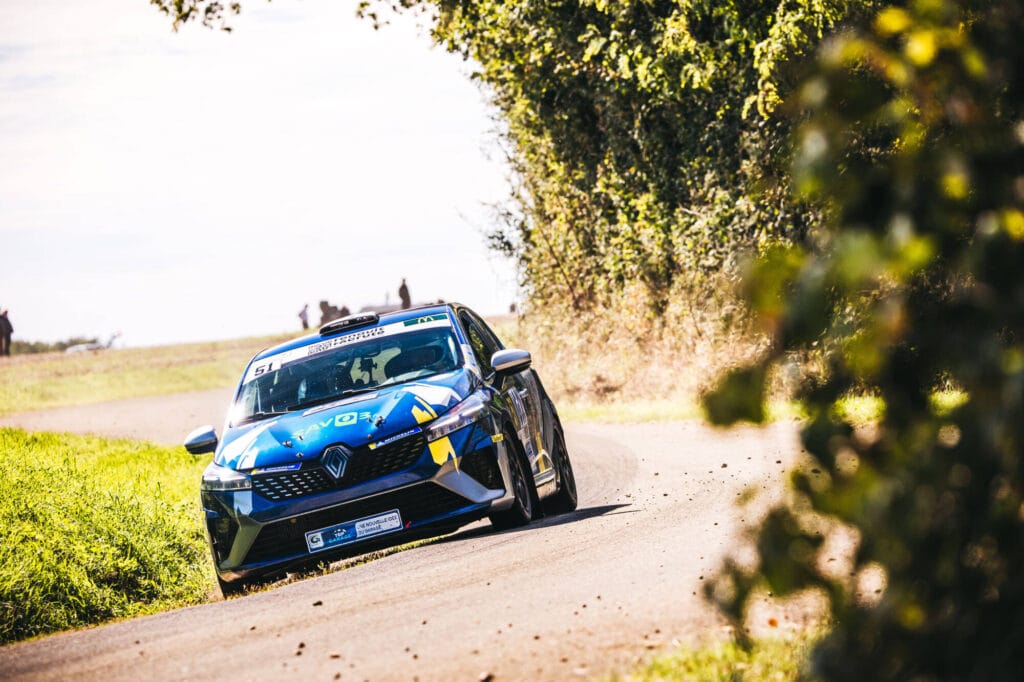
Round two of the 2026 Clio Trophy France Asphalte calendar featured another thrilling battle. After losing on home soil earlier in the year, Paul and Adèle Dachicourt bounced back, overcoming a puncture to secure their maiden victory on the special stages of Rallye Vosges Grand Est. The Fun Meca Sport crew triumphed over Florent and Benjamin Fagnone, who claimed their first podium finish, as did third-place finishers Clément Didier and Théo Jacquemet.
Ten weeks after the season-opening Rallye Le Touquet Pas-de-Calais, the Clio Trophy France Asphalte service park gathered in Gérardmer. Before the start, Romain Fostier, Jérôme Janny, Pascal Bérard, and Maxence Girard each won a Michelin tyre in a prize draw organised by Ceerta, the official Michelin Motorsport distributor in the French Rally Championship.
Eager for revenge after watching victory slip away on home soil, Paul Dachicourt made a strong start under a return of sunshine. Setting the fastest time in Pays d’Ormont, he took the lead in a rally that quickly proved to be a gruelling ordeal. Following the neutralisation of SS2, Maxence Potard fought back in Corcieux, whilst Florent Fagnone made full use of his local knowledge to join the battle.
The rest of the leg offered little respite for the crews. Paul Dachicourt repeated his success in Pays d’Ormont, whilst overall leader Maxence Potard faltered, as did other contenders. Florent Fagnone, however, refused to give up and closed the gap to 5.2s by posting the fastest time in Moyenmoutier. The first turning point came during the second pass through Corcieux. Paul Dachicourt lost precious seconds due to a puncture whilst his rival secured a second consecutive stage win to take the lead.
However, there was still plenty to play for. On Sunday morning, Paul Dachicourt launched his attack on La Vologne, the rally’s longest special stage. The Fun Meca Sport driver put in a brilliant drive, taking more than twenty seconds off his rivals. Florent Fagnone fought back on Le Haut du Tôt, but his pursuer kept pushing on Les Trois Cols.
The duel reached its culmination in the final loop. Paul Dachicourt closed the gap to 0.6s before regaining the lead on the penultimate stage, and doing what had to be done to secure his first victory in Clio Trophy France Asphalte. Florent Fagnone finished second and claimed his first podium finish on his first appearance this season. Behind this duo, the treacherous Vosges stages continued to claim their victims. With a consistent performance, Clément Didier emerged in third place after a fine battle with Jérôme Janny. Tom Le Jossec completed a top-five, with everyone achieving their best result to date. Romain Fostier finished sixth, ahead of Yohan Roumieux, who set the final fastest stage time. Christophe Truchet, Pascal Bérard and Fabien Combe followed in that order.
Buoyed by this maiden win, Paul Dachicourt takes the lead in the general classification and the Juniors category from Maxence Potard. Florent Fagnone made a remarkable comeback, climbing straight to third place. The top three in the Jean Ragnotti Performer classification is the same whilst Groupe Bertrand now leads the Renault Network Challenge thanks to Florent Fagnone’s performance. Romain Fostier extended his lead in the Gentlemen class, whilst Belgian driver Clémentine Benoît is now the highest-placed woman in the classification.
Meanwhile, Clio Rally3 continued its run of success in the French Rally Championship with Jérôme Jacquot and Marielle Grandemange, leading a sweep of the top five in the Rally3 category.
Following this latest action-packed round, the Clio Trophy France Asphalte will continue its seventh season in the Clio Rally5 era at Rallye Rouergue Rodez Aveyron Occitanie from 9 to 11 July.
Paul Dachicourt: “This first victory is incredible. We only really got started in the Clio Trophy France Asphalte a year ago, so it’s brilliant to be competing at the sharp end today and taking our first win. We’ve known since the middle of the 2025 season that we have the pace to be among the frontrunners, but minor setbacks have consistently slowed our momentum. This time, everything fell into place, and the emotion at the final stop was quite unique. We didn’t really know where we’d be competing on this rally, which was completely new to us. We’d never even driven in the region before. The main target was to get through the first loops before pushing harder in the second ones. Despite that, we set the fastest time right from the start. We led throughout the first day, but a puncture on Corcieux 2 cost us dearly, dropping us back by more than 30 seconds. On Sunday, Adèle and I put in a superb first special stage, clean and executed to the millimetre. That allowed us to close the gap before two stages I wasn’t at all comfortable with. Again, we had to be smart, avoid the pitfalls and keep the championship in mind. We kept pushing hard in the afternoon as victory was within our reach, and it’s brilliant that we did it. We’re in a strong position for the rest of the season. We’re top of the general classification, with a small lead and our dropped score still available. The Rouergue and Mont-Blanc are rallies we know well and enjoy. We put in some great performances there last year, so we’re ready and looking forward to it.”
Clio Trophy France Asphalte – Rallye Vosges Grand Est
1. Paul Dachicourt – Adèle Dachicourt (J) 2h01m53.3s
2. Florent Fagnone – Benjamin Fagnone +6.0s
3. Clément Didier – Théo Jacquemet (J) +2m56.1s
4. Jérôme Janny – Helena Pecheur +3m05.2s
5. Tom Le Jossec – Christophe Leroy (J) +3m28.7s
6. Romain Fostier – Ophélie Abchiche (G) +3m42.4s
7. Yohan Roumieux – Bastien Fontaine +3m43.2s
8. Christophe Truchet – Barbara Truchet +4m14.3s
9. Pascal Bérard – Caroline Bérard (G) +5m38.4s
10. Fabien Combe – Fabien Chèze +6m39.1s
11. Néo Rivallant – Melvin Fraigne (J) +6m51.7s
12. Jacques Bourrat – Jean Bourrat (G) +7m51.5s
13. Ludovic Lamarche – Baptiste Gauthier +7m57.1s
14. Léo Véricel – Jade Gaston (J) +8m06.4s
15. Alexis Poso – Lou Cardot (J) +8m49.6s
16. Romain Brun – Aurélia Chevalier (J) +10m02.4s
17. Laurent Lambert – Yannick Le Moing (G) +10m11.1s
18. Maxence Girard – Ricardo Gil Mateus (J) +10m22.9s
19. Maxime Chagot – Bertrand Chagot +12m44.5s
20. Thomas Van Outryve – Johanna Della-Pina (J) +13m00.s
21. Clémentine Benoit – Éric De Bolle (J, F) +15m03.8s
22. Guillaume Delobel – Coralie Darras +18m11.4s
23. Louis Gass – Alison Girard (J) +31m39.1s
24. Oliver Sørensen – Frederik Glad (J) +34m59.5s
25. Alex Florenson – Charline Dichamp (J) +1h00m14.6s
26. Amaury Pages – Mattis Chalvidan (J) +1h08m36.5s
27. Louis Bottin – Titouan Andreux (J) +1h09m15.9s
DNF. Justin Veyrard – Corentin Landon (J)
DNF. Maxence Potard – Maxime Biegalke (J)
DNF. Alfred Sablonnière – Romain Depeux (J)
DNF. Thibault Hickel – Alexian Parmentier (J)
DNS. Franck Giraud – Christophe Dubien (G)
DNS. Thomas Santiago – Anne-Laurence Breton (J)
Classic Nasir Hameed…